
Folgert Karsdorp · computational cultural evolution
Fragments of Cultural Change.
Each lit page is a publication. Hover to find one, click to take it out.Each lit page is a publication. Tap one to find it.
I’m a researcher and head of the Ethnology, Everyday Culture & Society (EECS) department at the Meertens Institute of the Royal Netherlands Academy of Arts and Sciences, and Professor of Computational Methods for the Study of Cultural Change at Utrecht University. My research addresses questions about how culture spreads, develops, and disappears, drawing on computational and quantitative methods from ecology, population genetics, and machine learning, with particular attention to methodological challenges in analyzing biased historical collections and measuring cultural diversity and loss.
Worlds to walk through
Experiments in making games out of cultural heritage collections. Every tale, card and song book you meet in them is a real record from the archive.
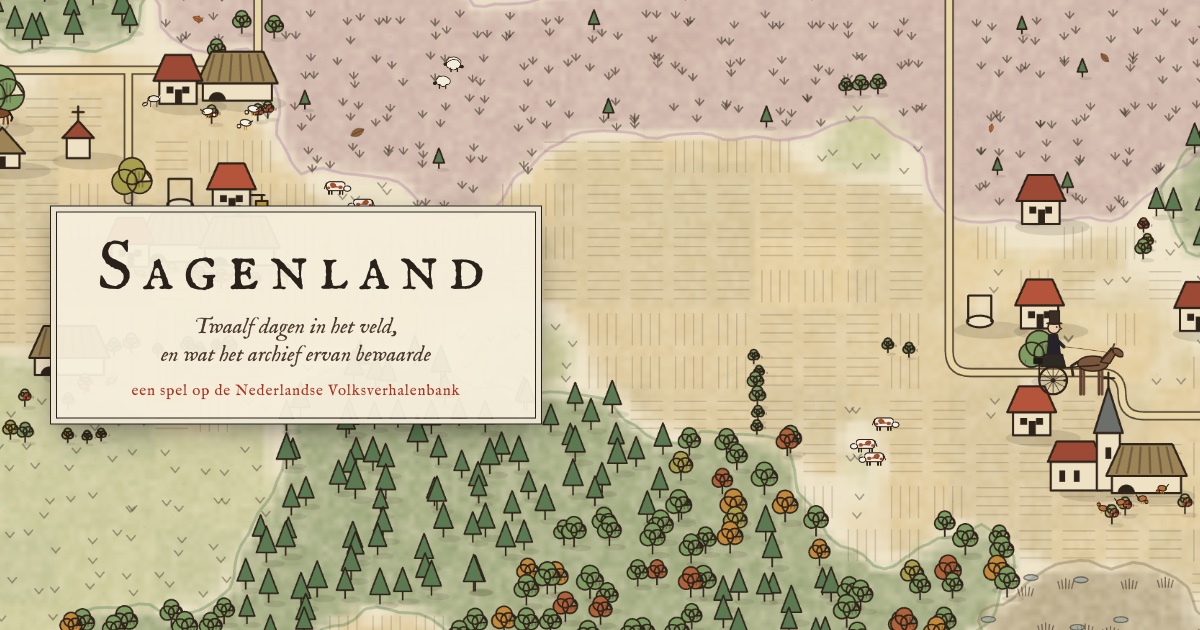 Sagenland
Twelve days in the field, and what the archive kept
Cycle the villages of a region that has been telling itself stories for eight years before you arrive. Visit tellers, follow tips, and race the clock: every tale in the game is a real record from the Dutch Folktale Database.
Set out
Sagenland
Twelve days in the field, and what the archive kept
Cycle the villages of a region that has been telling itself stories for eight years before you arrive. Visit tellers, follow tips, and race the clock: every tale in the game is a real record from the Dutch Folktale Database.
Set out
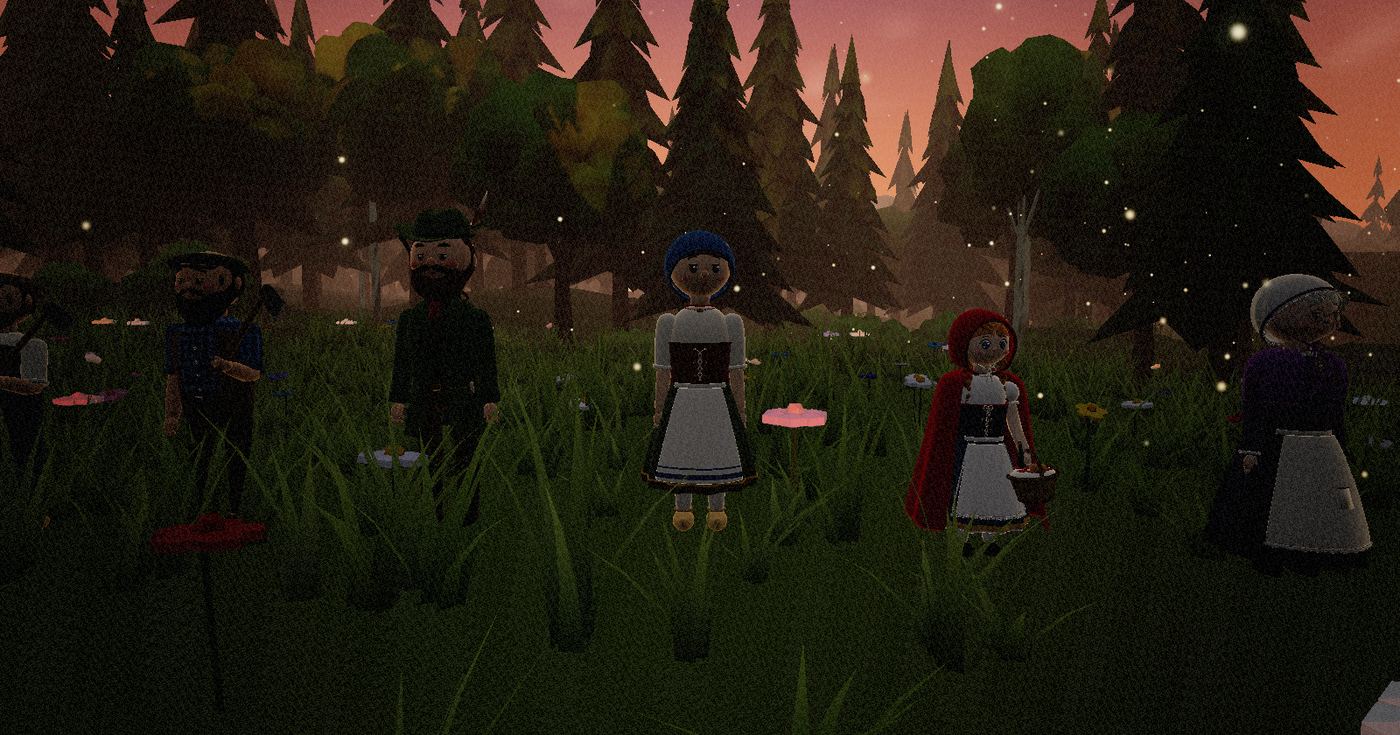 Roodkapje
The Forest of Tellings
Walk the forest as Little Red Riding Hood. Every fork in the path is a variant attested in 427 Dutch tellings, from 1781 to 2015, and the real words of those books keep you company along the way.
Begin the tale
Roodkapje
The Forest of Tellings
Walk the forest as Little Red Riding Hood. Every fork in the path is a variant attested in 427 Dutch tellings, from 1781 to 2015, and the real words of those books keep you company along the way.
Begin the tale
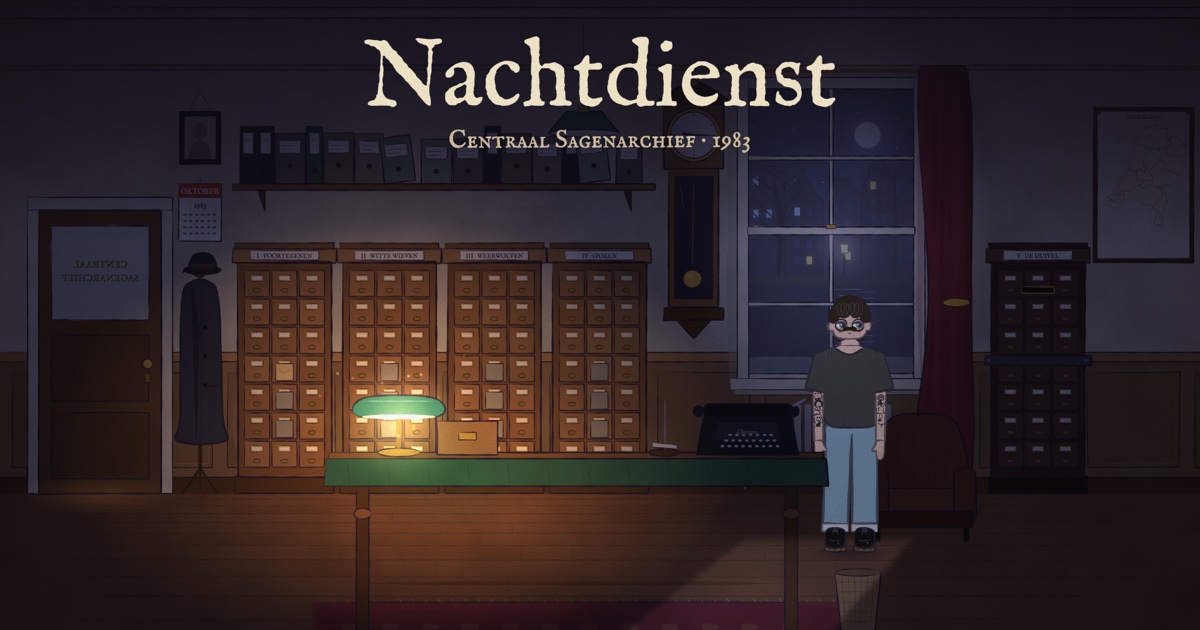 Nachtdienst
Night duty in the Centraal Sagenarchief, 1983
The collector has gone home and left a note on the reading table: twelve envelopes to file before midnight, and cabinet five stays shut. Every puzzle is built from the 9,659 stories of the Dutch Folktale Database.
Start your shift
Nachtdienst
Night duty in the Centraal Sagenarchief, 1983
The collector has gone home and left a note on the reading table: twelve envelopes to file before midnight, and cabinet five stays shut. Every puzzle is built from the 9,659 stories of the Dutch Folktale Database.
Start your shift
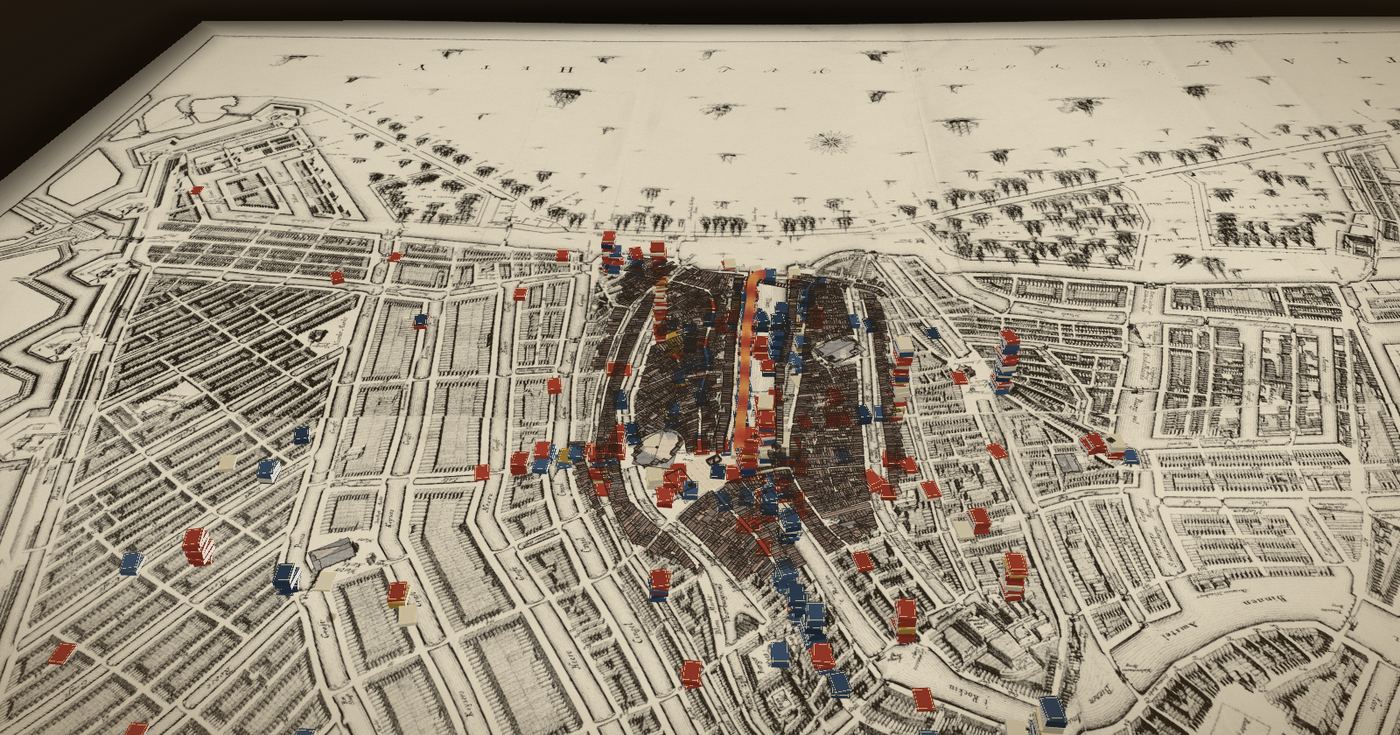 Op ’t Water
Amsterdam’s song-book trade, 1600–1700
Every song book in the Dutch Song Database that names an Amsterdam printer, placed at the address in its imprint on Gerrit de Broen’s engraved map. Then step down onto the quay where the trade was busiest.
Open the map
Op ’t Water
Amsterdam’s song-book trade, 1600–1700
Every song book in the Dutch Song Database that names an Amsterdam printer, placed at the address in its imprint on Gerrit de Broen’s engraved map. Then step down onto the quay where the trade was busiest.
Open the map
Fragments
Notebooks on counting what the record leaves out: unseen species models, coverage, and the biases of the archives we inherit.
- Two ends of a folktale archive: Sagenland and Nachtdienst Two browser games built from the Dutch Folktale Database: collect legends in the field in Sagenland, then file them at the archive by night in Nachtdienst.
- Comparing diversity under collection bias An interactive companion to our Royal Society Interface paper on collection bias: set up two assemblages, bias how their records were collected, and see which standardization strategy still recovers the true diversity ratio.
- What Shall We Do with the Unseen Sailor? Applies unseen species models to VOC historical records to estimate the true number of sailors missing from the archive.
- Estimating Unseen Shared Cultural Diversity Extends unseen species models to estimate the shared diversity between two cultural collections — how many artefacts they have in common that neither has observed.
- Population Size Estimation as a Regression Problem Reframes population size estimation as a Bayesian regression problem to correct for heterogeneous detection probabilities in cultural samples.
Selected publications
- 2026 Correcting collection bias in comparative studies of diversity Journal of the Royal Society Interface
- 2026 Saved in Translation? Estimating latent diversity shared by historic cultures and the case of medieval literature in French and Dutch Evolutionary Human Sciences
- 2022 Forgotten Books: The Application of Unseen Species Models to the Survival of Culture Science